
Volkswagen Golf 2020 1.0 TSI (gen 8)
Volkswagen Golf 2020 1.0 petrol description
Hatchback Volkswagen Golf 2020 1.0 TSI has been produced from 2020 to 2024. It has three-cylinder petrol engine with displacement of 1.0 litres, which produces power of 110 horsepower and torque 200 Nm (Newton metres) on 2000 revolutions per minute.
This 3-cylinder 12-valve engine camshaft is driven by belt (What is an engine chain and belt? ). Engine has fuel injection system and BorgWarner B01V turbine. The engine meets the Euro 6 emissions standard. Engine lifespan (mileage before major repairs or overhaul) can last from 220 up to 370 thousand kilometres. Remember that engine life depends on regular maintenance and the quality of the materials used (oils, fuels, etc.).
More engine specs
The VW DLAA 1.0 TSI is a three-cylinder turbocharged gasoline engine produced at Volkswagen’s Czech plant from 2020 to 2024. It was later discontinued after stricter ...
This Volkswagen Golf 1.0 engine oil type is 0W-20 and oil capacity is 4 litres.
Volkswagen Golf 2020 1.0 TSI has front wheel drive (FWD) and manual gearbox with 6 gears.
Volkswagen Golf 2020 1.0 TSI accelerates to speed 100 kilometres per hour in 10.2 seconds. The maximum speed of this car is 202 km/h.
Volkswagen Golf 2020 1.0 TSI fuel consumption is 5.3 litres per 100km in combined city/highway mode (18.9 km/l), fuel consumption in city - 4 l/100km, highway fuel economy - 4 l/100km.
According to user reviews, this Volkswagen (VW) real everyday fuel consumption is 5.6 litres per 100 km, which is 6% more than the manufacturer's stated. More - Real Volkswagen Golf fuel consumption.
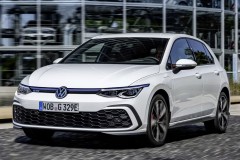
Volkswagen Golf 2020 1.0 TSI technical data
| Model: | Volkswagen Golf 1.0 TSI |
|---|---|
| Body style: | Hatchback |
| Production period: | 2020. January ... 2024. December |
| Engine: | 999 cm3 Petrol, 3 cylinders |
| CO2 emissions: | no data |
| Power: | 110 HP |
| Torque: | 200 NM ON 2000 RPM |
| Gearbox: | Manual gearbox (6 gears) |
| Drive type: | Front wheel drive (FWD) |
| Top speed: | 202 km/h |
| Acceleration 0-100 km/h: | 10.2 seconds |
| Fuel consumption (l/100km): | 5.3 (combined) 4.0 (urban) 4.0 (highway) |
| Real fuel consumption: | 5.6 l/100km (42 MPG) by user reviews from various sources |
| Car dimensions: | 4.29m (length) 1.79m (width) 1.46m (height) |
| Turning diameter: | 10.9 meters |
| Seats: | 5 seats |
| Trunk capacity: | 381 litres |
| Trunk max capacity: | 1237 litres (with rear seats folded down, if possible) |
| Gross weight: | 1750 kg Net weight: 1182 kg Load capacity: 568 kg |
Volkswagen Golf 2020 1.0 TSI engine DLAA
Engine reliability and common problems:
The VW DLAA 1.0 TSI is a three-cylinder turbocharged gasoline engine produced at Volkswagen’s Czech plant from 2020 to 2024. It was later discontinued after stricter Euro 6e emissions requirements came into effect and was replaced by the DUSA engine. Despite its small displacement, the engine offers good efficiency and decent everyday performance, but it is quite demanding in terms of maintenance.In general, the DLAA can be reliable, but it does not tolerate neglected service or low-quality consumables. Long oil change intervals or cheaper unsuitable oil can quickly lead to stuck piston rings and increased oil consumption. The cylinder walls use plasma coating, which is also sensitive to poor fuel quality and contamination. Because of this, clean fuel and proper oil are especially important for long-term durability.
Like many modern direct-injection gasoline engines, this unit is prone to carbon buildup on the intake valves. Over time this can affect engine smoothness, throttle response, and performance, so intake cleaning may eventually become necessary.
The timing belt also deserves close attention. If it breaks, the valves will be damaged, so belt condition and replacement intervals should not be ignored. Overall, the DLAA is a modern and efficient small turbo engine, but its reliability depends heavily on disciplined servicing, quality oil, good fuel, and timely monitoring of the timing belt.
Overall, this engine can last around 220,000 to 370,000 km if properly maintained, using the correct quality oil and fuel, and carrying out regular checks and maintenance.
The engine has hydraulic valve tappets (lifters), which provide quieter operation and do not require periodic adjustment, but are more complex in design and can cause serious engine damage in the event of failure.
| Engine displacement | 999 cm3 |
|---|---|
| Number of cylinders | 3 |
| Bore (cylinder diameter) | 74.5 mm |
| Stroke length (piston move) | 76.4 mm |
| Compression ratio | 11.5 : 1 |
| Camshaft drive | Timing belt Timing belt engines are generally quieter and less vibrating than chain engines, but belt usually needs to be replaced more often and the risk of breakage is higher. |
| Fuel system | Injection |
| Volkswagen Golf 2020 1.0 TSI oil type | 0W-20 |
| Oil capacity | 4 litres (4.2 quarts) |
| Power | 110 HP |
| Torque | 200 NM ON 2000 RPM |
| Start of production (year) | no data |
| Duration of production | no data |
| Engine also used on | Skoda Octavia Audi A3 Skoda Fabia Seat Leon Audi A1 and 5 other models |
All Volkswagen Golf hatchback [2020 - 2024] modifications
| Modification | Engine | Power | Consumption | Gearbox | Drive type |
|---|---|---|---|---|---|
|
Volkswagen Golf 2020 1.0 TSI
Most fuel efficient petrol version by real consumption |
1.0 Petrol | 90 HP | 5.3 l/100km | Manual (5) | Front wheel |
| Volkswagen Golf 2020 1.0 TSI | 1.0 Petrol | 110 HP | 5.3 l/100km | Manual (6) | Front wheel |
| Volkswagen Golf 2020 1.0 eTSI | 1.0 Petrol MHEV hybrid engine |
110 HP | 5.2 l/100km | Automatic (7) | Front wheel |
| Volkswagen Golf 2020 1.4 TSI | 1.4 Hybrid PHEV |
150 HP | 0.9 l/100km | Automatic (6) | Front wheel |
| Volkswagen Golf 2020 GTE 1.4 TSI | 1.4 Hybrid PHEV |
150 HP | 1.2 l/100km | Automatic (6) | Front wheel |
|
Volkswagen Golf 2020 1.5 TSI
Most fuel efficient petrol version |
1.5 Petrol | 130 HP | 4.9 l/100km | Manual (6) | Front wheel |
| Volkswagen Golf 2020 1.5 eTSI | 1.5 Petrol MHEV hybrid engine |
130 HP | 5.5 l/100km | Automatic (7) | Front wheel |
| Volkswagen Golf 2020 1.5 TSI | 1.5 Petrol | 150 HP | 5.0 l/100km | Manual (6) | Front wheel |
| Volkswagen Golf 2020 1.5 eTSI | 1.5 Petrol MHEV hybrid engine |
150 HP | - | Automatic (7) | Front wheel |
| Volkswagen Golf 2020 GTI 2.0 TSI | 2.0 Petrol | 245 HP | 7.4 l/100km | Manual (6) | Front wheel |
| Volkswagen Golf 2020 GTI 2.0 TSI | 2.0 Petrol | 245 HP | 7.4 l/100km | Automatic (7) | Front wheel |
| Volkswagen Golf 2020 GTI Clubsport 2.0 TSI | 2.0 Petrol | 300 HP | 7.4 l/100km | Automatic (7) | Front wheel |
| Volkswagen Golf 2021 R 2.0 TSI 4x4 Jan 2021 — Dec 2024 | 2.0 Petrol | 315 HP | 10.2 l/100km | Manual (6) | All wheel |
| Volkswagen Golf 2021 R 2.0 TSI 4x4 Jan 2021 — Dec 2024 | 2.0 Petrol | 315 HP | 9.0 l/100km | Automatic (7) | All wheel |
| Volkswagen Golf 2020 R 2.0 TSI 4x4 | 2.0 Petrol | 320 HP | 7.8 l/100km | Automatic (7) | All wheel |
|
Volkswagen Golf 2022 R 20 Years 2.0 TSI 4x4
Jan 2022 — Dec 2024 Most dynamic version - 100 km/h in 4.6 seconds |
2.0 Petrol | 333 HP | 7.8 l/100km | Automatic (7) | All wheel |
|
Volkswagen Golf 2020 2.0 TDI
Most fuel efficient diesel version |
2.0 Diesel | 115 HP | 3.5 l/100km | Manual (6) | Front wheel |
| Volkswagen Golf 2020 2.0 TDI | 2.0 Diesel | 150 HP | 4.4 l/100km | Manual (6) | Front wheel |
| Volkswagen Golf 2020 2.0 TDI | 2.0 Diesel | 150 HP | 3.7 l/100km | Automatic (7) | Front wheel |
|
Volkswagen Golf 2020 GTD 2.0 TDI
Most powerfull diesel version (200 HP) |
2.0 Diesel | 200 HP | 5.2 l/100km | Automatic (7) | Front wheel |