
Citroen Jumpy 2006 2.0 petrol description
Minivan / MPV Citroen Jumpy 2006 Combi L2H1 2.0 has been produced from 2006 to 2012. It has four-cylinder petrol engine with displacement of 2.0 litres, which produces power of 143 horsepower at 6000 rpm and torque 180 Nm (Newton metres) on 2500 revolutions per minute.
This 4-cylinder 16-valve engine camshaft is driven by belt (What is an engine chain and belt? ). Engine has fuel injection system without turbocharger. The engine meets the Euro 4 emissions standard. Average engine life expectancy (mileage before serious repairs are needed) is from 290 000 to 490 000 kilometres. Note that engine life can be longer or shorter depending on maintenance.
More engine specs
The Peugeot EW10A (RFJ) is a 2.0-liter naturally aspirated gasoline engine introduced in 2005 as an updated version of the older EW10J4, adapted to meet Euro 4 emissions standards. In general, the engine is considered fairly reliable and uncomplicated for its class, with ...
This Citroen Jumpy 2.0 engine oil type is 5W-30 and oil capacity is 5 litres.
Citroen Jumpy 2006 Combi L2H1 2.0 has front wheel drive (FWD) and manual gearbox with 5 gears.
Citroen Jumpy 2006 Combi L2H1 2.0 accelerates to speed 100 kilometres per hour in 13 seconds. The maximum speed of this car is 165 km/h.
The fuel consumption of this Citroen Jumpy 2006 Combi L2H1 2.0 in combined mode (combining urban and highway driving) is 10.1 litres per 100km (9.9 km/l), fuel consumption in city - 13.3 l/100km. Fuel tank capacity is 80 litres or 21.14 gallons, which gives a mileage up to 780 kilometers without refueling in urban cycle.
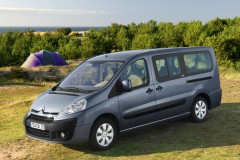
Citroen Jumpy 2006 Combi L2H1 2.0 technical data
| Model: | Citroen Jumpy Combi L2H1 2.0 |
|---|---|
| Body style: | Minivan / MPV |
| Production period: | 2006. January ... 2012. January |
| Engine: | 1997 cm3 Petrol, 4 cylinders |
| CO2 emissions: | no data |
| Power: | 143 HP ON 6000 RPM |
| Torque: | 180 NM ON 2500 RPM |
| Gearbox: | Manual gearbox (5 gears) |
| Drive type: | Front wheel drive (FWD) |
| Maximum speed: | 165 km/h |
| Acceleration 0-100 km/h: | 13.0 seconds |
| Fuel consumption (l/100km): | 10.1 (combined) 13.3 (urban) |
| Fuel tank capacity: | 80 litres (21.1 gallons) |
| Car dimensions: | 5.14m (length) 1.90m (width) 1.94m (height) |
| Gross weight: | 2771 kg |
Citroen Jumpy 2006 Combi L2H1 2.0 engine EW10A
Engine reliability and common problems:
The Peugeot EW10A (RFJ) is a 2.0-liter naturally aspirated gasoline engine introduced in 2005 as an updated version of the older EW10J4, adapted to meet Euro 4 emissions standards. In general, the engine is considered fairly reliable and uncomplicated for its class, with relatively low repair costs and good overall durability when maintained properly.The most common complaints are related to oil consumption and oil leaks. Many engines begin to consume noticeable amounts of oil with mileage, sometimes reaching around 500–700 ml per 1,000 km. Oil leaks are also frequent, especially around the valve cover gasket and various seals. In most cases owners deal with this through regular gasket replacement and careful oil maintenance.
The engine is also quite sensitive to fuel quality. Poor gasoline quickly leads to dirty injectors, carbon buildup on spark plugs, and ignition coil failures. Because of this, using the correct octane fuel and avoiding low-quality gasoline is especially important for long-term reliability.
Another typical issue is unstable idle speed. This is usually caused by contamination in the throttle body or faults in the idle control system. In many cases the problem can be solved simply by cleaning the intake and throttle components or replacing a faulty sensor.
With higher mileage, owners often report knocking noises from the top of the engine. These sounds are commonly linked to hydraulic lifters, which are sensitive to oil quality and long service intervals. Switching to the correct oil specification and shortening oil change intervals often helps reduce the problem.
Strong vibrations are another known characteristic, particularly on older vehicles. In most cases this is caused by worn engine mounts rather than internal engine damage.
Despite these weaknesses, the EW10A is generally regarded as a durable and practical engine. It has a relatively simple design, is easy to repair, and spare parts remain widely available. According to many owners and mechanics, a well-maintained engine can comfortably exceed 300,000 km, and some examples reach 350,000–400,000 km before requiring major repairs. As with many naturally aspirated PSA engines, longevity depends heavily on regular servicing, good-quality oil, and proper fuel.
Overall, this engine can last around 290,000 to 490,000 km if properly maintained, using the correct quality oil and fuel, and carrying out regular checks and maintenance.
The engine has hydraulic valve tappets (lifters), which provide quieter operation and do not require periodic adjustment, but are more complex in design and can cause serious engine damage in the event of failure.
| Engine displacement | 1997 cm3 |
|---|---|
| Number of cylinders | 4 |
| Bore (cylinder diameter) | 85 mm |
| Stroke length (piston move) | 88 mm |
| Compression ratio | 11 : 1 |
| Camshaft drive | Timing belt Timing belt engines are generally quieter and less vibrating than chain engines, but belt usually needs to be replaced more often and the risk of breakage is higher. |
| Fuel system | Injection |
| Citroen Jumpy 2006 Combi L2H1 2.0 oil type | 5W-30 |
| Oil capacity | 5 litres (5.3 quarts) |
| Power | 140 - 145 HP ON 6000 RPM |
| Torque | 180 - 200 NM ON 2500 RPM |
| Engine manufacturer | Peugeot |
| Start of production (year) | 2005 |
| Duration of production | 21 years |
Often in the first years of production, engines tend to have various constructive problems, so it is recommended to choose a car with this engine from 2008 onwards. |
|
| Engine also used on | Peugeot 307 Peugeot 407 Citroen C5 Citroen C4 Citroen C4 Picasso |
Generally, the use of an engine in several models and its long production run is an indication of the quality of the engine and the success of its design. |
Most often compared to
All Citroen Jumpy minivan [2006 - 2012] modifications
| Modification | Engine | Power | Consumption |
|---|---|---|---|
|
Citroen Jumpy 2006 Combi L1H1 1.6 HDi
Most fuel efficient diesel version |
1.6 Diesel | 92 HP | 7.2 l/100km |
|
Citroen Jumpy 2006 Combi L2H1 1.6 HDi
Most fuel efficient diesel version by real consumption |
1.6 Diesel | 92 HP | 7.5 l/100km |
|
Citroen Jumpy 2006 Combi L1H1 2.0
Most dynamic version - 100 km/h in 12.7 seconds |
2.0 Petrol | 143 HP | 10.1 l/100km |
| Citroen Jumpy 2006 Combi L2H1 2.0 | 2.0 Petrol | 143 HP | 10.1 l/100km |
|
Citroen Jumpy 2006 Combi L1H1 2.0 HDi
Most fuel efficient diesel version |
2.0 Diesel | 122 HP | 7.2 l/100km |
| Citroen Jumpy 2006 Combi L2H1 2.0 HDi | 2.0 Diesel | 122 HP | 7.5 l/100km |
| Citroen Jumpy 2006 Combi L1H1 2.0 HDi | 2.0 Diesel | 138 HP | 7.4 l/100km |
| Citroen Jumpy 2006 Combi L2H1 2.0 HDi | 2.0 Diesel | 138 HP | 7.6 l/100km |
|
Citroen Jumpy 2010 Combi L1H1 2.0 HDi
Jan 2010 — Jan 2012 Most dynamic version - 100 km/h in 12.7 seconds |
2.0 Diesel | 163 HP | - |
|
Citroen Jumpy 2010 Combi L2H1 2.0
Jan 2010 — Jan 2012 Most dynamic version - 100 km/h in 12.7 seconds |
2.0 Diesel | 163 HP | - |